A guide from VELCEN, the store that sells the creatine gummies featured here. Updated October 2026 · 4 min read.
Creatine is well studied
Creatine monohydrate is the most extensively studied form of creatine, and there are more than 500 peer-reviewed publications on creatine supplementation.2 A 2021 research review describes creatine supplementation as relatively well tolerated, especially at 3–5 g a day.2 The body already makes some creatine, and it’s found in foods like meat and fish.1 That evidence is about the ingredient, not about any one product, so read the label of whatever you buy.
Where ATP comes in
Creatine doesn’t build muscle on its own. It helps your muscles regenerate ATP, their fastest energy source.* For the strength benefits research looks at, that means some resistance training.1 2 Creatine supports muscle strength and power during resistance training.* What changes over months comes from how you train and eat.
Not just for bodybuilders
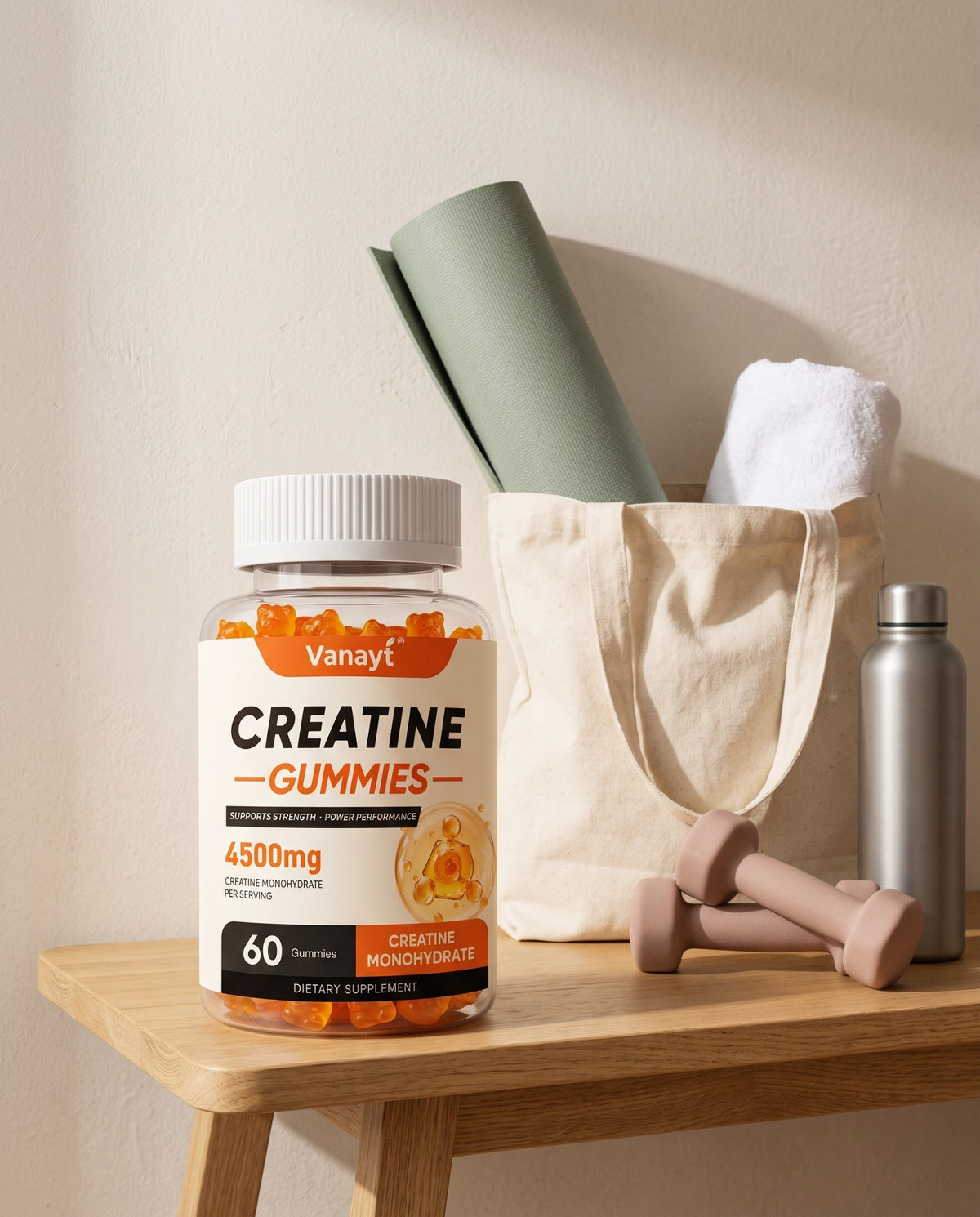
Creatine isn’t a men’s supplement. Most creatine studies have been done in men, and some suggest women may see smaller strength gains.1 A 2021 review that asked “Is creatine only effective for males?” concluded it isn’t, though it noted that research in younger women is still limited.2 Resistance training doesn’t have to mean a gym: dumbbells, resistance bands, or moves like squats and push-ups count.
 Creatine Monohydrate Gummies
See the full label
How much, and how often
Research reviews describe 3–5 g a day as a typical daily amount.1 2 A 2021 review found a loading week isn’t required.2 Without a loading week, the ISSN describes a gradual approach: 3 g a day for 28 days.1 For comparison, a pound of uncooked beef or salmon has about 1–2 g of creatine.1 Take it every day, at a time you never miss, and don’t take more than your label says.
Gummies: nothing to measure
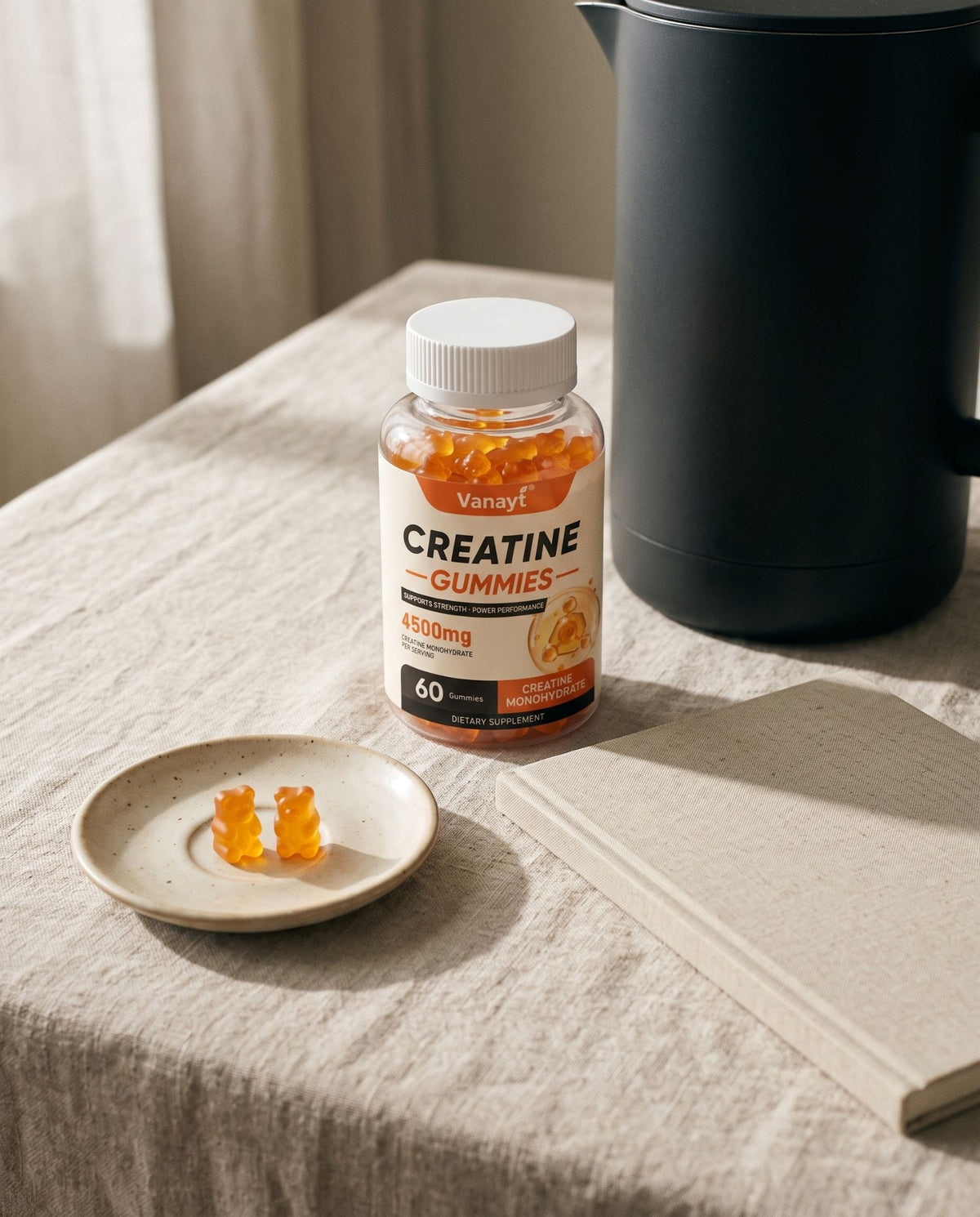
Powder needs a scoop, a shaker and a drink. Gummies need nothing. In fairness to powder, it’s usually cheaper per gram and has no sugar, so gummies trade some sugar and cost for nothing to measure or mix. The gummies we sell list 4.5 g of creatine monohydrate per 2-gummy serving on the label, within the 3–5 g a day research reviews describe as typical.1 2